Demand Gen Campaign Basics: Reaching Quality Audiences
By Traxotool · August 24, 2026 · 7 min read
A demand gen campaign only works when real people see it. If half your clicks come from bots and proxies, your budget funds impressions no human ever notices, and your engagement data tells you a story that never happened. This guide walks through how demand generation works, how to measure it honestly, and how to keep fraudulent traffic out of your funnel so your numbers stay trustworthy.
Key Takeaways
- A demand gen campaign lives at the top of the funnel, so results depend on reaching real audiences.
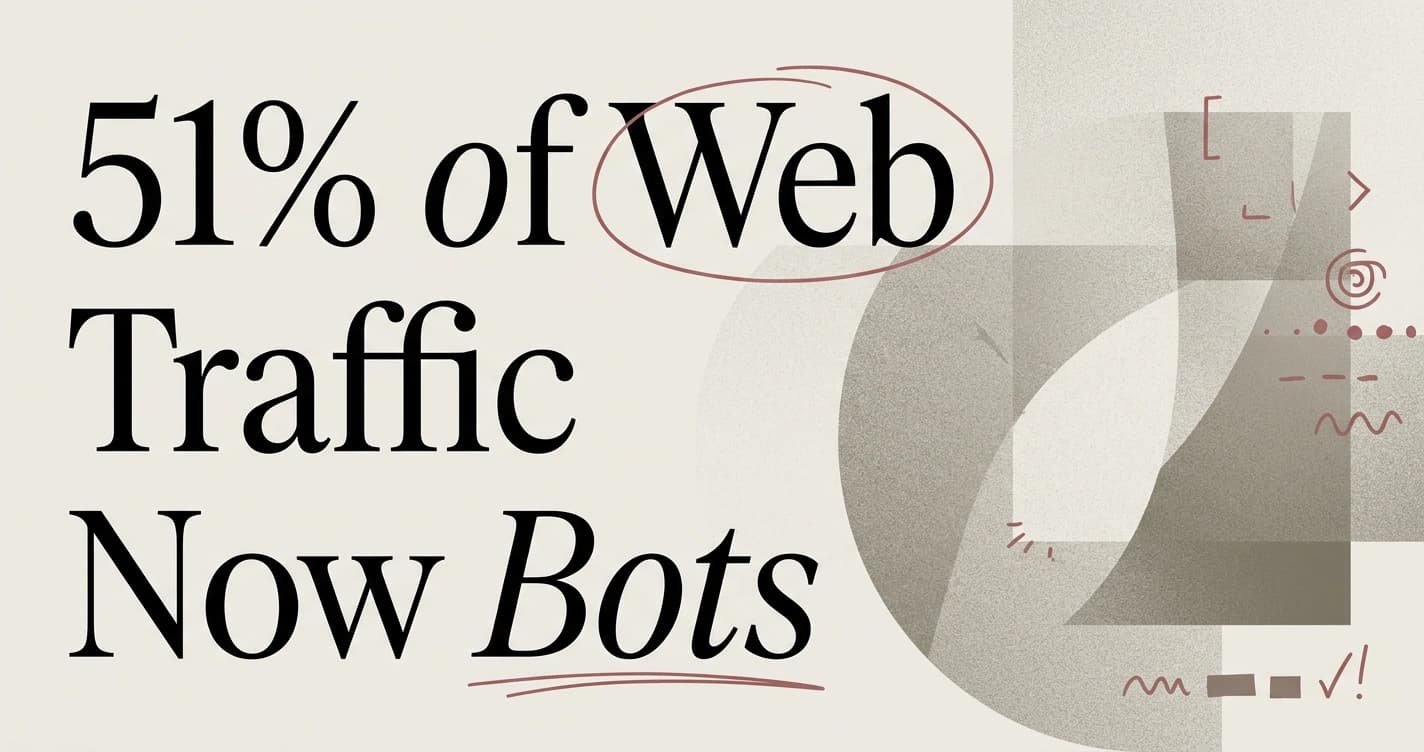
- Automated traffic hit 51% of all web activity in 2024 (Imperva, 2025), which means quality filtering is now a baseline requirement.
- Measure engaged actions, not raw clicks, to see whether real people are responding.
- Filter clicks for VPN, proxy, bot, and datacenter signals before they touch your landing page.
What Is a Demand Gen Campaign and How Does It Work?
A demand gen campaign builds awareness and interest among people who may not yet know they have a problem you solve. Demand generation (the practice of creating early interest before a buyer starts actively shopping) sits ahead of lead capture and conversion. It matters more than ever: in 2025, B2B marketers grew demand gen budgets by a net +11.7%, the highest increase of any function (6sense, 2025 Marketing Spend Report).
The mechanics are simple. You run paid campaigns across pop, push, native, search, or social to put your message in front of a broad but relevant audience. Clicks flow to a landing page. Interested visitors move deeper into your funnel through content, retargeting, or a signup.
Because demand gen casts a wide net, it also catches the most junk. Broad targeting and high volume are exactly the conditions where invalid traffic thrives. That makes traffic quality a first-class concern, not an afterthought you handle later.
How Do You Set Goals and Measure True Engagement?
You set demand gen goals around engaged actions, not surface clicks, because a click by itself proves nothing about intent. Focus on metrics a bot rarely fakes well: engaged session time, scroll depth, repeat visits, and downstream lead quality. Raw click counts are the easiest number to inflate and the least meaningful.

Start by defining what a qualified engagement looks like for your offer. A useful goal stack for a demand gen campaign might read like this:
- Reach: impressions delivered to your target geo and device profile.
- Engagement: sessions longer than a set threshold, with meaningful scroll or interaction.
- Micro-conversions: newsletter signups, content downloads, or retargeting pixel fires.
- Lead quality: the share of leads that pass validation and move to the next stage.
Accuracy at the tracking layer is what makes these goals reliable. If invalid clicks pad your session counts, every downstream number inherits the distortion. Clean measurement starts with clean inputs, which is why conversion tracking and traffic filtering belong in the same conversation. Getting your Google Ads conversion tracking set up accurately is the other half of this equation.
Common mistake: Optimizing toward click-through rate alone. A campaign can post a high CTR while attracting almost no real buyers, because automated traffic clicks freely and converts never.
Why Does Traffic Quality Make or Break Demand Gen?
Traffic quality determines whether your demand gen campaign teaches you anything true. In 2024, automated traffic made up 51% of all web activity, passing human traffic for the first time in a decade, with bad bots alone accounting for 37% of traffic (Imperva, 2025). When most of the internet is machines, a broad campaign will pull in machines unless you filter them out.
Poor traffic quality does damage on two fronts. First, it burns budget on visitors who cannot convert. Second, and more insidious, it corrupts the data you use to optimize. If your top-performing zone is actually a datacenter pushing bot clicks, you will double down on your worst source and call it a win.
Consider a simple before-and-after. A media buyer running push traffic sees a 4.2% click-to-lead rate and scales the campaign. After adding a filtering check, the buyer discovers 30% of clicks came from proxies and datacenters. The true rate on clean traffic was higher, and the wasted spend went to fake visitors. Spotting these sources early is a skill worth building, and our walkthrough on how to spot datacenter traffic in your ad campaigns covers the telltale signals.
How Do You Avoid Wasted Spend on Fraudulent Audiences?
You avoid wasted spend by screening clicks for fraud signals before you pay to send them anywhere useful. The scale of the problem is hard to ignore: invalid traffic wasted an estimated $63 billion in global digital ad spend across major platforms, with 8.51% of all paid traffic flagged as invalid (Lunio Wasted Ad Spend Report, via MediaCat, 2025). Roughly one in twelve paid clicks never came from a real buyer.
Here is a practical sequence for cutting that waste out of a demand gen campaign:
- Baseline your traffic. Pull a report and segment by source, geo, and device. Look for impossible patterns, like a single zone driving huge volume with zero engagement.
- Screen for fraud signals. Check each click for VPN, proxy, bot, and datacenter IP markers. These are the fingerprints of non-human or masked traffic.
- Route by verdict. Send clean visitors to your real offer and divert suspicious clicks elsewhere so they never pollute your funnel or your data.
- Reconcile the math. Compare spend against clean traffic only. Recalculate cost per real lead, then reallocate budget toward the sources that pass.
The cost math favors filtering. At usage-based pricing from around $0.15 per 1,000 checks, screening a million clicks costs about $150. If that prevents even a fraction of the waste in a campaign spending thousands, the return is immediate. Different tools price this differently, so comparing your options is worth the effort before you commit to one.
How Do You Protect Demand Gen Funnels With Link Filtering?
You protect a demand gen funnel by placing a filtering layer between your traffic source and your landing page, so every click is judged before it reaches your offer. This is where Good URL and Bad URL routing earns its keep. Clean visitors go to the Good URL, your real landing page. Suspicious clicks go to the Bad URL, which can be a safe page, a decoy, or a competitor's offer, while your tracking parameters stay intact.
A protected demand gen link keeps its attribution data through the check, so nothing breaks downstream. A typical structure looks like this:
/A7K91?zone_id={zone_id}&sub_id={sub_id}
The filtering layer reads the click, screens the IP for VPN, proxy, bot, and datacenter signals in real time, then forwards the visitor with zone_id and sub_id preserved. Your analytics still see exactly which source and placement drove each clean visit.
This matters because bots increasingly target the technical parts of your funnel. In 2024, 44% of advanced bot traffic was aimed at APIs rather than simple page loads (Imperva 2025 Bad Bot Report), which means form endpoints and signup flows are active targets. A filtering layer that screens before the form loads keeps junk out of your lead database. TraxoTool handles this routing with real-time checks and preserved tracking parameters, and it reports the clean-versus-blocked split so you can see what filtering caught.
Broader bot defense is its own discipline, and if you want the full picture on keeping non-human traffic out of your campaigns, start with our overview on bot protection for marketers.
Putting It Into Practice
Your next move is small and concrete: pull one live campaign's traffic report and segment it by source. If a zone shows heavy volume with no real engagement, wrap that campaign in a protected link and route the suspicious clicks away from your funnel. You will see the clean-versus-blocked split within a day, and the recalculated cost per real lead will tell you where your budget actually belongs. You can build a protected link and start testing from a $10 top-up, then scale only the sources that survive the filter.
Frequently asked questions
What is a demand gen campaign?
A demand generation campaign creates awareness and interest in your product among people who may not know they need it yet. It sits at the top of the funnel and feeds warm prospects into your nurture and conversion stages.
How do I measure demand gen success?
Track engaged sessions, scroll depth, return visits, and downstream lead quality rather than raw clicks. Clicks alone can be inflated by bots, so tie your goals to actions only a real person would take.
How does bad traffic hurt demand gen campaigns?
Bot and proxy traffic inflates click counts, drains budget, and pollutes your engagement data. In 2024, invalid traffic wasted an estimated $63 billion in global ad spend, distorting the signals demand gen teams rely on.
Can I filter fraudulent traffic before it reaches my landing page?
Yes. A traffic filtering layer screens each click for VPN, proxy, bot, and datacenter signals in real time, then routes clean visitors to your offer and diverts suspicious clicks away from your funnel.