Bot Protection for Marketers: What You Need to Know
By Traxotool · August 23, 2026 · 7 min read
If bots are eating your ad spend, bot protection is the filtering layer that screens each click and stops fake visitors before they reach your offer. You add it at the link level, keep your existing trackers, and route clean traffic to your landing page while suspicious clicks go somewhere they cannot cost you money.
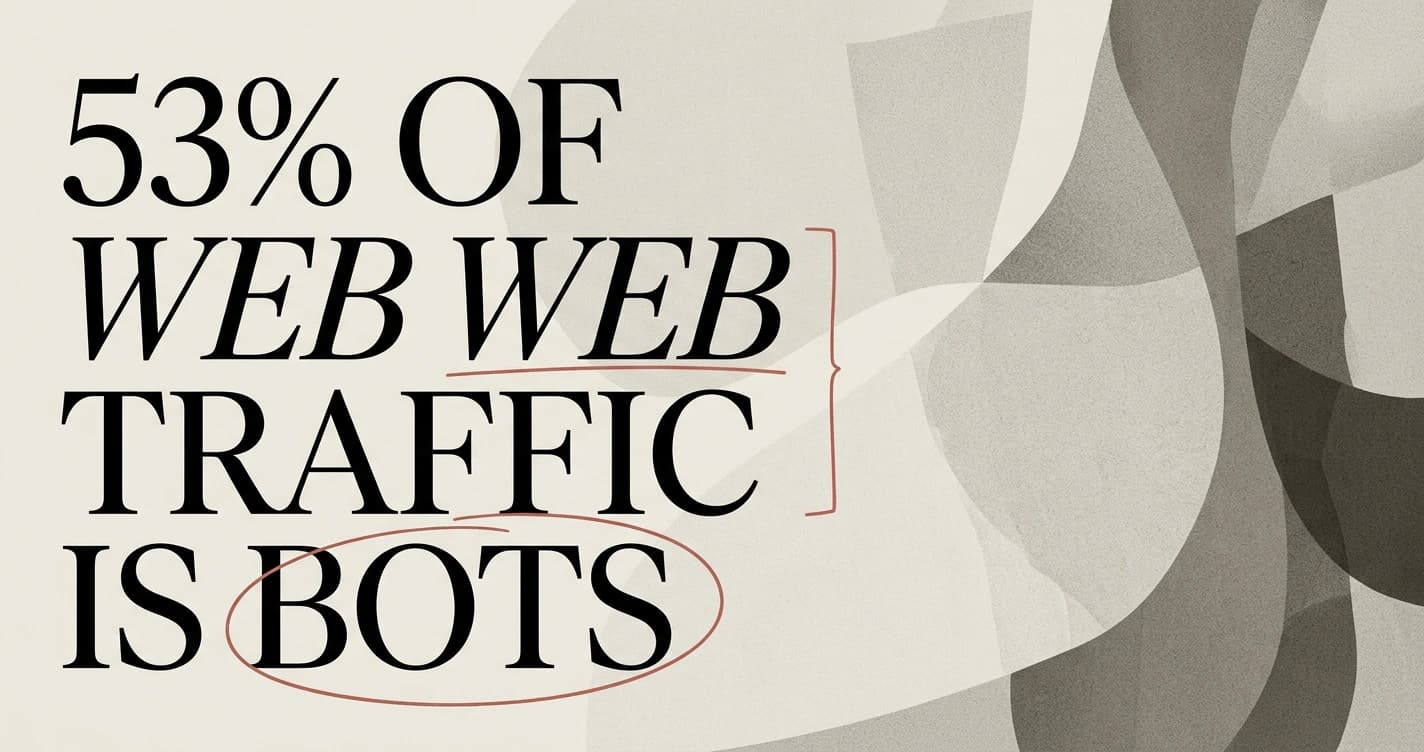
That matters more every year. Automated traffic made up 51% of all web traffic in 2024 and climbed to 53% in 2025, according to the Imperva Bad Bot Report. For a media buyer, that means a real chance the majority of clicks on a hot campaign never came from a human at all.
Why Bots Target Paid Campaigns and Landing Pages
Bots chase paid campaigns because that is where the money moves. Bad bots reached 37% of all internet traffic in 2024, up from 32% the prior year, per the Imperva Bad Bot Report. Anywhere you point a budget and a conversion pixel, automated traffic follows to skim value or scramble your data.
Paid campaigns are an easy target for a few reasons:
- Your links are public. A tracking URL on a pop, push, or native placement can be hit by any script that finds it.
- You pay per click. Every bot visit that clears the auction spends real money, whether or not a human ever sees your page.
- Conversions are measurable. Fraudsters mimic conversions to trigger payouts, and competitors send junk clicks to burn your budget.
Landing pages get the same treatment. Bots crawl forms, submit fake leads, and fire events that look like intent. If you buy on a cost-per-lead basis, a form-filling bot is a direct line into your wallet.
Invalid traffic (IVT): any click or impression that does not come from a genuine, interested human, including bots, proxies, and datacenter traffic.

Types of Bot Traffic Hitting Ad Budgets
The bots draining your campaigns are not one thing. Across 105.7 billion impressions, Fraudlogix measured a 20.64% invalid traffic rate in its 2026 analysis, which shows how much of the open programmatic pool is non-human. Knowing the categories helps you decide what to block.
Here is a quick reference for the traffic types most media buyers run into.
| Bot type | What it does | Why it costs you |
|---|---|---|
| Datacenter traffic | Clicks originating from cloud servers, not homes or phones | Cheap to generate, high volume, rarely converts |
| Proxy and VPN traffic | Real or fake users masking their true location | Breaks geo targeting and hides repeat offenders |
| Crawlers and scrapers | Automated scripts hitting your links and pages | Inflate clicks and impressions with zero intent |
| Conversion bots | Scripts that fake form fills or purchases | Trigger false payouts and poison your data |
Not every bot is malicious. Search crawlers and monitoring tools are automated too. The problem is the share that exists to spend your budget or fake outcomes, and that share is large enough to change how a campaign reads.
The trickiest category is sophisticated invalid traffic. These bots rotate residential IPs, run real browsers, and behave enough like humans to slip past basic filters. That is why signal-based checking beats simple IP blocklists.
How Bot Protection Preserves Conversion Data
Bot protection keeps your numbers honest by removing fake events before they enter your reporting. When invalid clicks fire conversion pixels, your cost-per-acquisition, click-through rate, and return on ad spend all drift away from reality, and every optimization decision after that inherits the error.
Think about what happens without a filter. A campaign gets 10,000 clicks. If 20% are invalid, roughly 2,000 of those clicks are noise. Your platform still optimizes toward whatever those bots did, so it may push more budget at the exact placements that attract the most automation.
Clean data changes the whole loop:
- Fewer junk clicks reach your page, so your click-to-conversion ratio reflects real people.
- Your ad platform learns from human behavior, which sharpens automated bidding instead of misleading it.
- Your creative and offer tests become trustworthy, because the winner won a fight against real visitors.
This is where accurate tracking and protection work together. A protected link only helps if your conversion pixel fires on the right visitors, so clean traffic and clean measurement reinforce each other.

Evaluating Bot Protection Solutions for Campaigns
The right bot protection for a media buyer works at the click level and in real time, not after the fact. Global ad fraud losses are projected to reach $100.2 billion in 2026 per Juniper Research figures reported by Clixtell, so the value of blocking a bad click before it spends is easy to justify. The question is which tool fits your workflow.
Use this checklist when you compare options:
- Real-time filtering. Does it decide before the visitor lands, or only report fraud after your budget is gone?
- Signal depth. Does it screen for VPN, proxy, bot, datacenter, and low-quality IP signals, or just a static blocklist?
- Parameter handling. Does it preserve tracking values like
zone_idandsub_idso your attribution survives the redirect? - Pricing model. Are you paying a flat retainer you may not use, or per check based on real volume?
- Integration effort. Can you wrap an existing link, or does it demand a full stack rebuild?
Common mistake: treating a post-campaign fraud report as protection. A report tells you what already happened. It does not stop the next bot from spending your money today.
A tool that only sends you a weekly IVT summary leaves the leak open all week. For a wider comparison of what is on the market, see our roundup of click fraud protection software top picks compared, then match the feature list above to how you actually buy traffic.
How TraxoTool Blocks Bots at the Link Level
TraxoTool sits between your traffic source and your offer, checking every click in real time before it reaches your page. Each visitor is screened for VPN, proxy, bot, datacenter, and low-quality IP signals. Clean traffic goes to your Good URL, and suspicious traffic goes to your Bad URL, while your tracking parameters stay intact.
The setup is a link, not a rebuild. You create a protected link and drop it into your campaign in place of the raw offer URL. A typical structure looks like this:
https://traxotool.com/A7K91?zone_id={zone_id}&sub_id={sub_id}
Your source fills in zone_id and sub_id, the Anti Fraud check runs, and the values pass through to whichever destination the visitor is routed to. Attribution survives, so your reports still tell you which zones and sub-sources perform.
A few things make this practical for day-to-day buying:
- Usage-based pricing starts at $0.15 per 1,000 checks with a $10 minimum top-up, so cost tracks real volume.
- Dashboard analytics show clean versus blocked percentages per campaign, which turns traffic quality into a number you can act on.
- API access lets developers and technical marketers wire the check into custom flows.
If you run pop, push, or native traffic, blocking a datacenter click for a fraction of a cent is cheaper than paying for the click and cleaning the data later. For a broader planning view, our campaign traffic protection buyer's guide for 2026 walks through how link-level filtering fits into a full media buying stack.
Where to Start
Pick one active campaign that has felt off, build a protected link for it, and watch the clean-versus-blocked split for a few days. That single test will tell you more than any fraud report, because you will see the traffic get filtered as it happens instead of reading about it later. You can start from a $10 top-up, keep your existing trackers, and decide based on your own numbers.
Frequently asked questions
What is bot protection for marketing campaigns?
It is a filtering layer that screens each click for automation, proxy, and datacenter signals, then blocks or redirects suspicious traffic before it reaches your offer or fires a conversion event.
How much ad traffic is actually bots?
Automated traffic accounted for 51% of all web traffic in 2024 and rose to 53% in 2025 per the Imperva Bad Bot Report. Not all of that is malicious, but a large share of paid clicks can be invalid.
Does bot protection hurt real conversions?
A well-tuned filter should not. It targets known automation signals like datacenter IPs and proxies, so genuine human visitors pass through to your Good URL while suspicious clicks are routed away.
Can I add bot protection without changing my whole stack?
Yes. Link-level tools like TraxoTool wrap your existing campaign links, so you keep your trackers and tracking parameters while adding a real-time check between the traffic source and your offer.